

(Purchases made through links in this post for my TeachersPayTeacher.com store and Amazon help to support this blog. Thanks!)
We are about to wrap up Unit 1 in our biology curriculum, which includes a biochemical section on biomolecules and reactions. As a classroom teacher, my approach to biomolecules was geared toward the types of questions the students would face on the standardized test. As a homeschool mom, my focus is getting her child ready for chemistry next year and college in four years, or sooner if she decided to take dual credit college biology as her older sisters did. Therefore, I wanted to include the molecular structure of the four biomolecules as well as how dehydration synthesis is used to create bonds between monomers to create polymers.
There are model building lab activities in the original biology curriculum. The NSHR Biology curriculum was created to be a complete, affordable curriculum for homeschool parents to use with their biology students. After the roll out, I began fine tuning the curriculum by creating the labs myself and recreating the units one at a time: Unit 1 Into to Biology, Unit 2 Cells, and Unit 3 Genetics.
I created new individual printable labs for Unit 1: Intro to Biology to build carbohydrates, lipids, and proteins using molecular model kits, or chenille stems and beads as an option for those not wanting to purchase a kit. For nucleic acids, I created a diagram for students to color in to identify the components, elements, and bonds.
My Lego loving daughter loved these activities. She worked through the labs individually, reading and building.
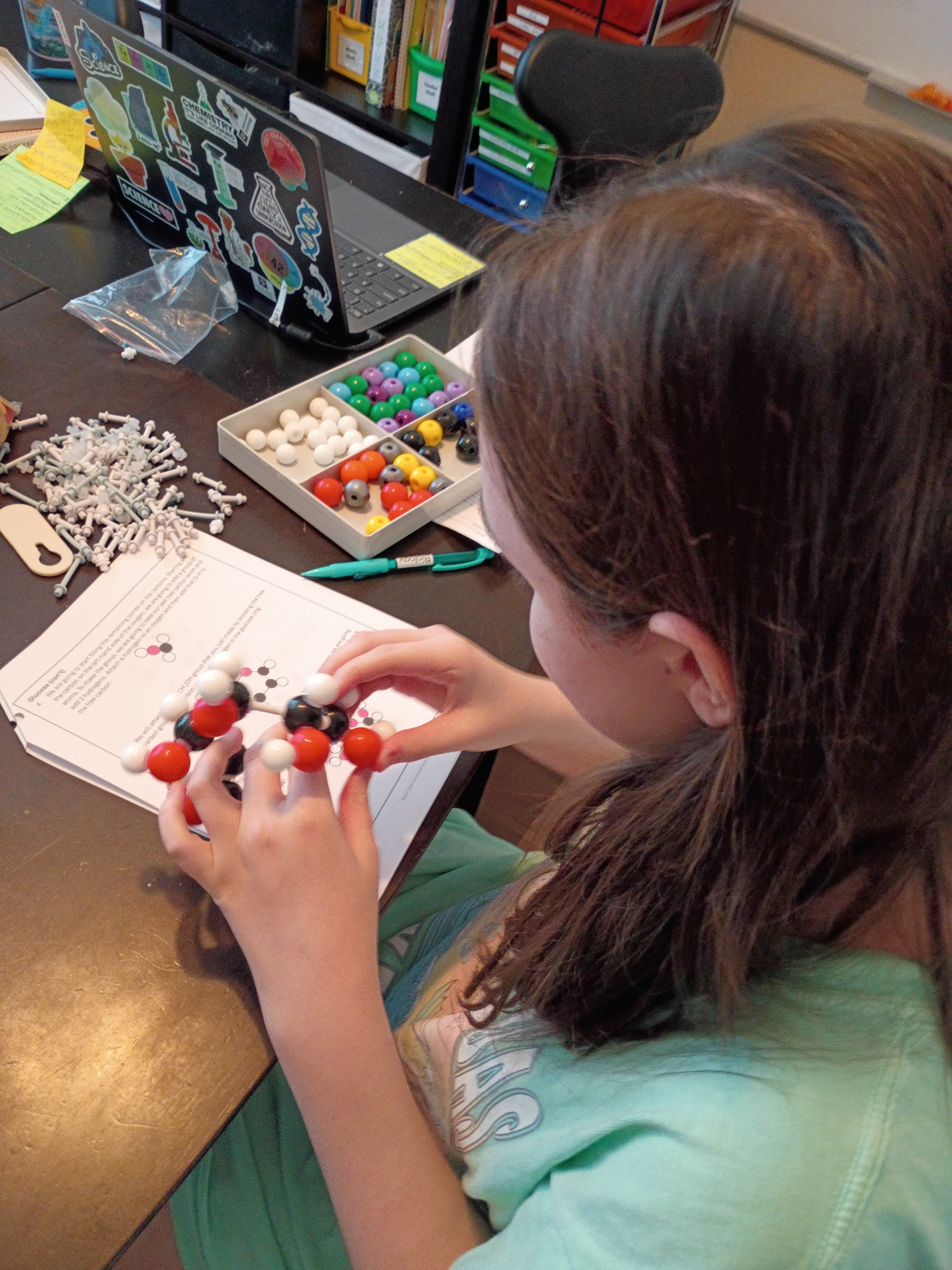
We did hit a snag in the carbohydrates lab; we ran out of oxygens and had to sub a different colored ball. I have the Old Nobby 239 piece model kit. Its a great kit, but I think I might upgrade to the 425 piece set.
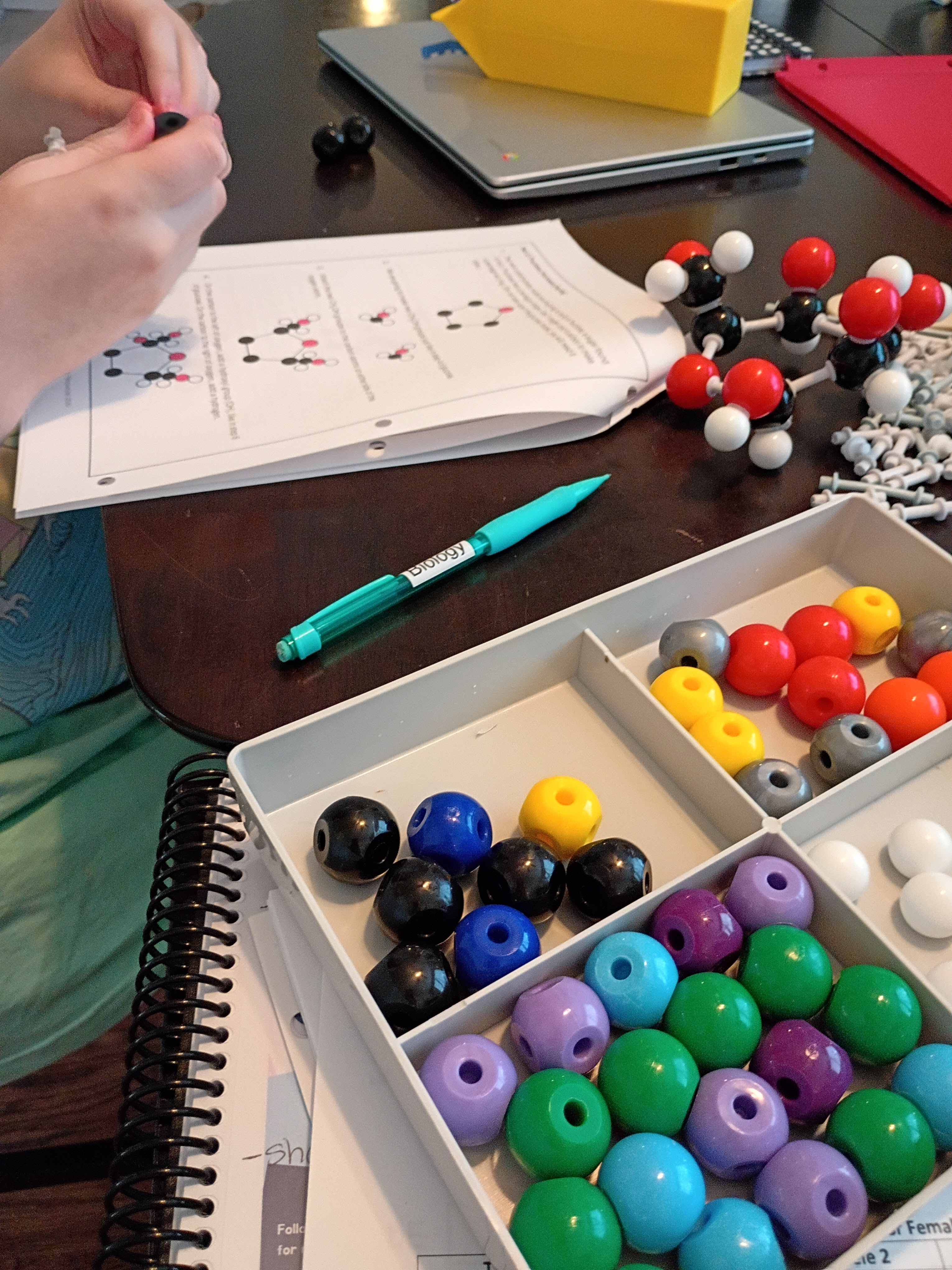
First, she built glucose, then she built fructose, both carbohydrate monomers called monosaccharides. The lab then has the students remove an OH group from one monomer and a H from the other monomer. Where those atoms were removed, there is now room for a new bond to link the glucose and fructose models together to make sucrose, a disaccharide.
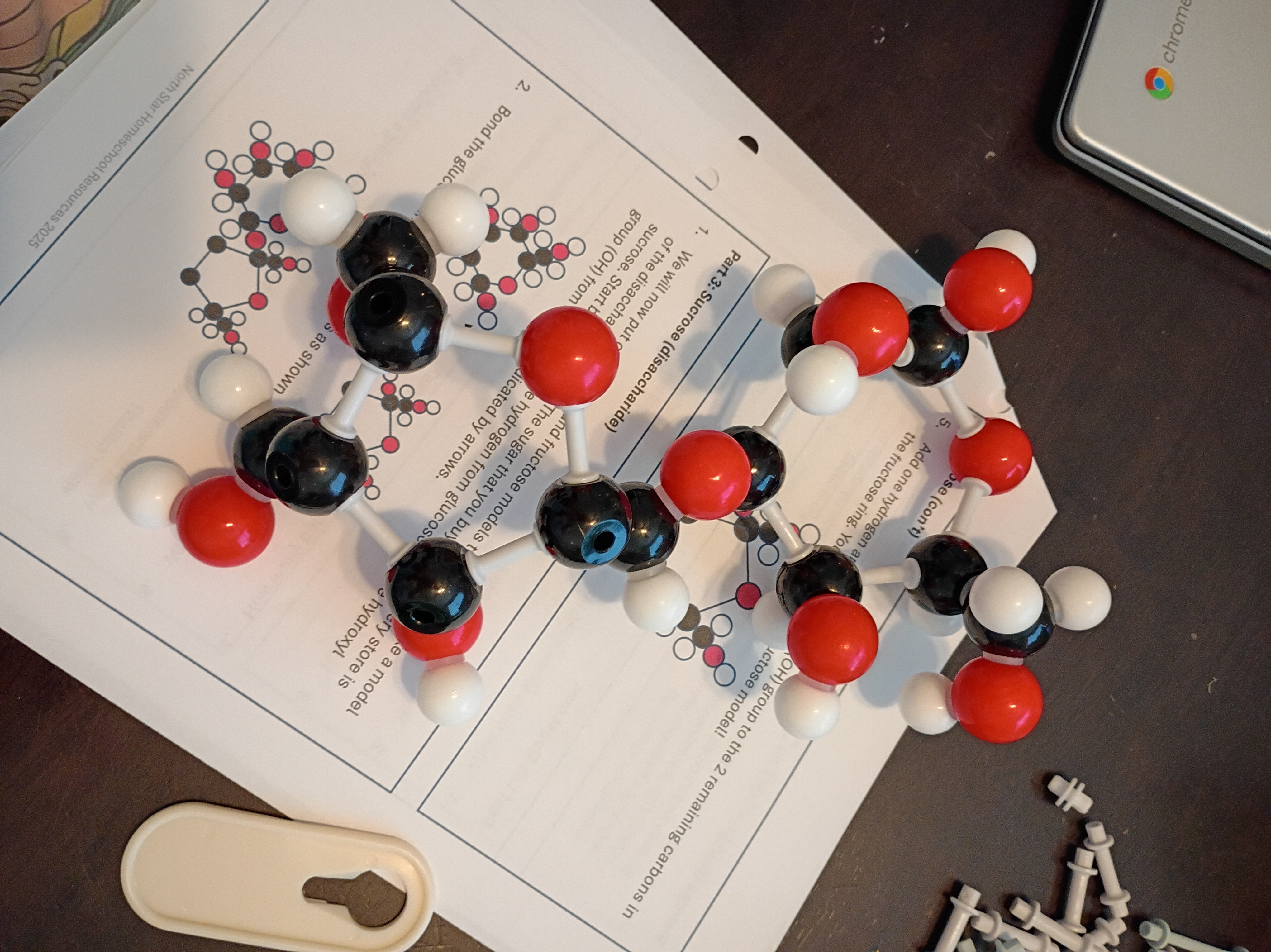
The OH and H atoms removed form a water molecule. This process is called dehydration synthesis, the forming of biochemical bonds by removing a water molecule. Understanding this process will help when studying the chemical equations of photosynthesis and cellular respiration later.
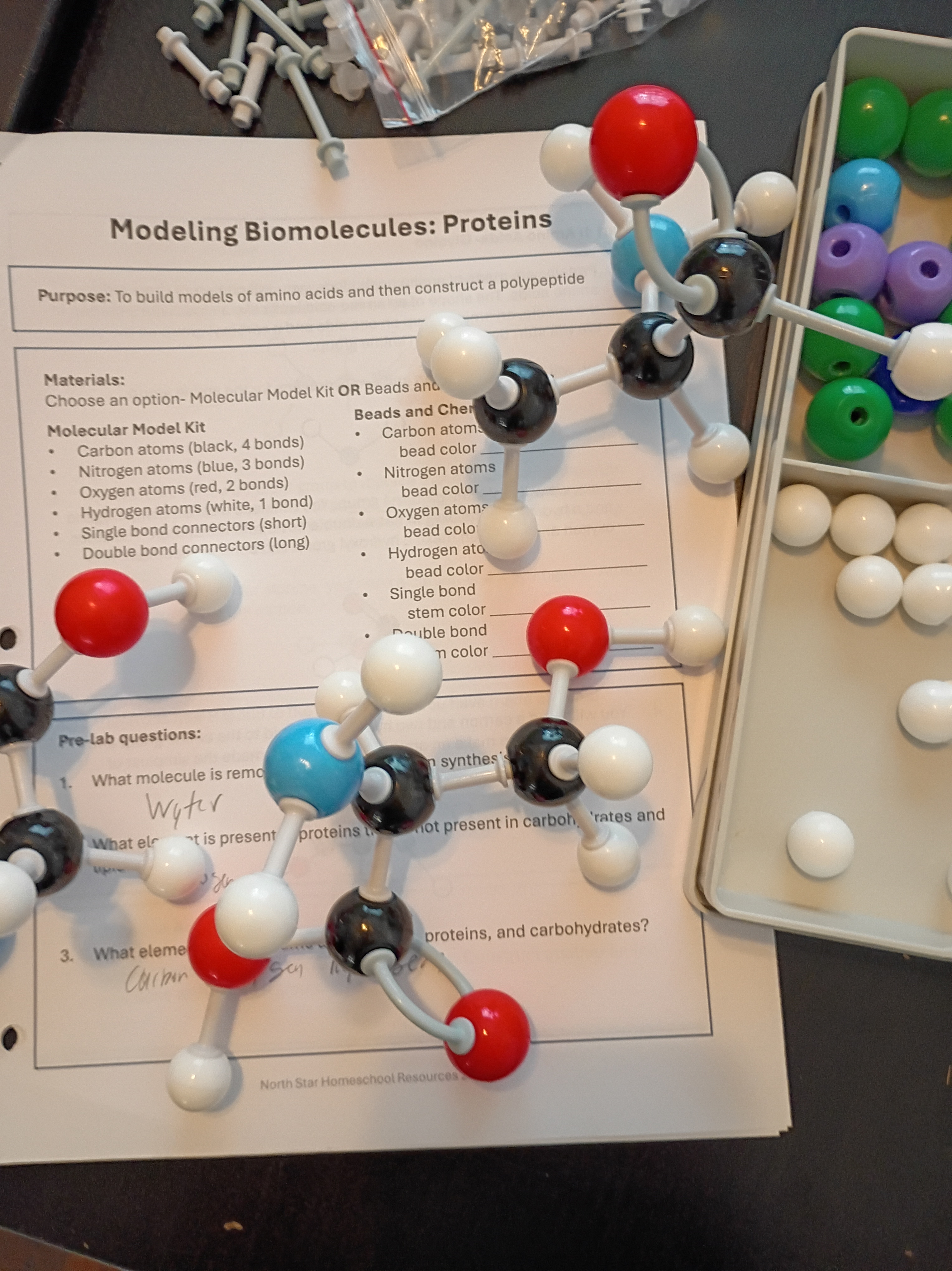
For lipids and proteins, the lab had a similar procedure: build monomers, link to form polymers via dehydration synthesis.
For nucleic acids, I chose a different type of activity: a coloring page. The student follows the step-by-step instructions to color different parts of a nucleic acid monomer, including the three main components, double bonds, and elements.
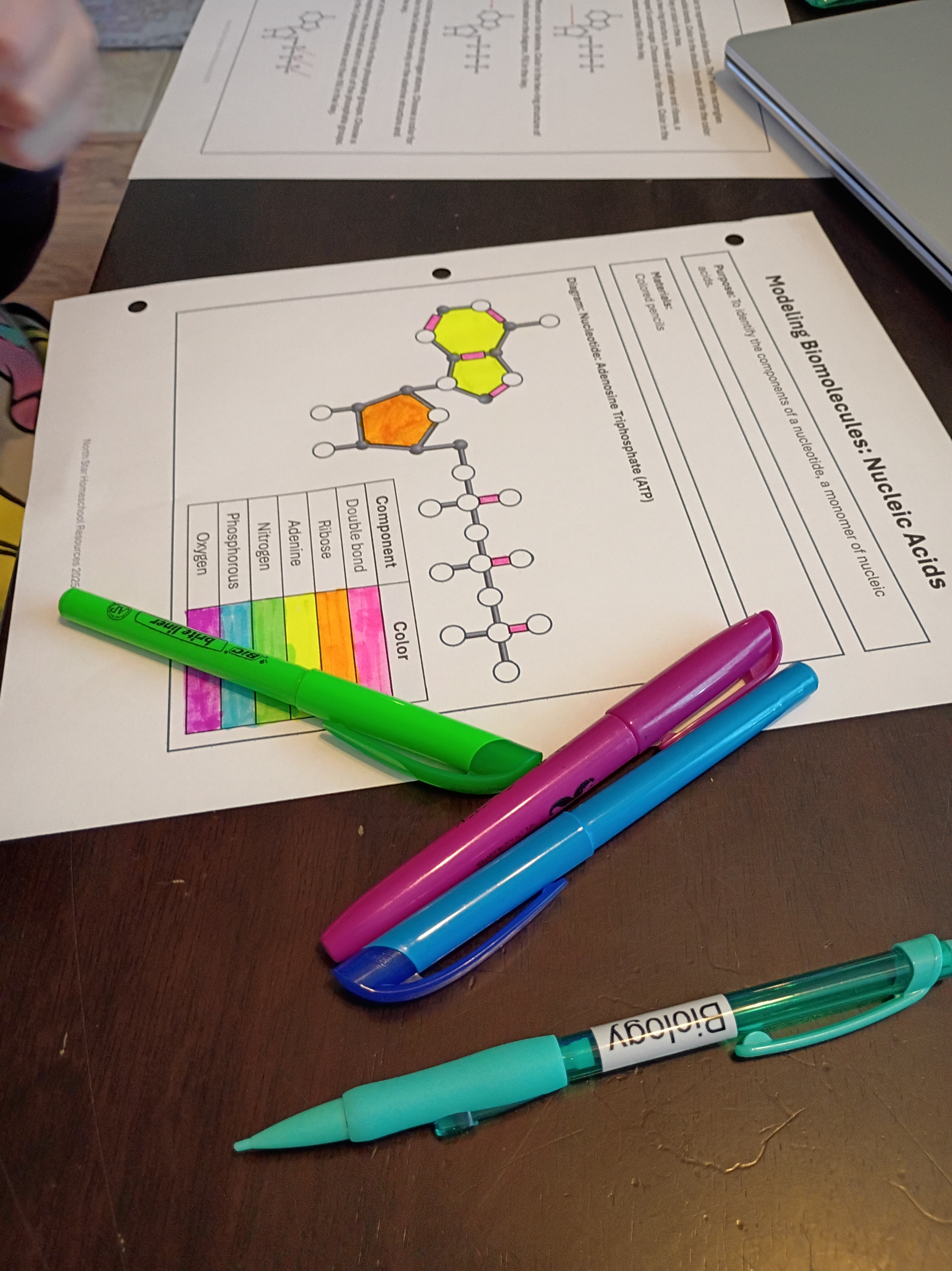
These activities work well with individual students in a homeschool setting, but would work just as well in a co-op or classroom setting in small groups.
The biomolecule modeling labs can be found in the North Star Homeschool Resources store as individual products, as a discounted bundle, or as part of the Unit 1 curriculum, which is complete with daily lesson plans, links to the free online textbook and videos, puzzles and games, and an exam with key.
Modeling Biomolecules: Carbohydrates
Modeling Biomolecules: Proteins
Modeling Biomolecules: Nucleic Acids
Biomolecules Discounted Bundle
Unit 1: Intro to Biology Curriculum
Hoping one of these option will make learning about biomolecules engaging for your biology student this year! Have fun with science!


 North Star Homeschool Resources