
(This post contains links to products in my Teachers Pay Teachers store and Amazon Affiliate links. Purchases help to fund the blog. Thanks!)
While learning about the differences between cells of different kingdoms in biology, some of the differences discussed are the presence of a nucleus (eukaryote vs. prokaryote), chloroplasts for photosynthesis, the presence of a cell wall and what the cell wall is composed of.
Plants are more relatable for students that other cell types with cell walls, such as fungi. Plants do not have a skeleton for support, so the role of the cell wall in giving structure and support to large plants is observable. They can see the importance of the cell wall just by looking at trees! There is also the obvious difference between plant and animal cells in that plants can photosynthesize thanks to their chloroplasts. One last major difference is the large central vacuole filled with water and nutrients that also helps to give the plant cell and the plant itself support and structure. Animal cells can contain large storage vacuoles (think fat cells), but not all animal cells do.
These three key differences are important for identifying plant cells under a microscope. Students may not be able to see the cell wall, but that can identify green chloroplasts and large central vacuoles. It helps for them to be familiar with the structure and purpose of each organelle in order to do so. To help with this, I depend on at least one activity where students identify structures and at least one activity where they must match the organelle with its function. These are very recall level activities, but important to understanding cell processes down the line.
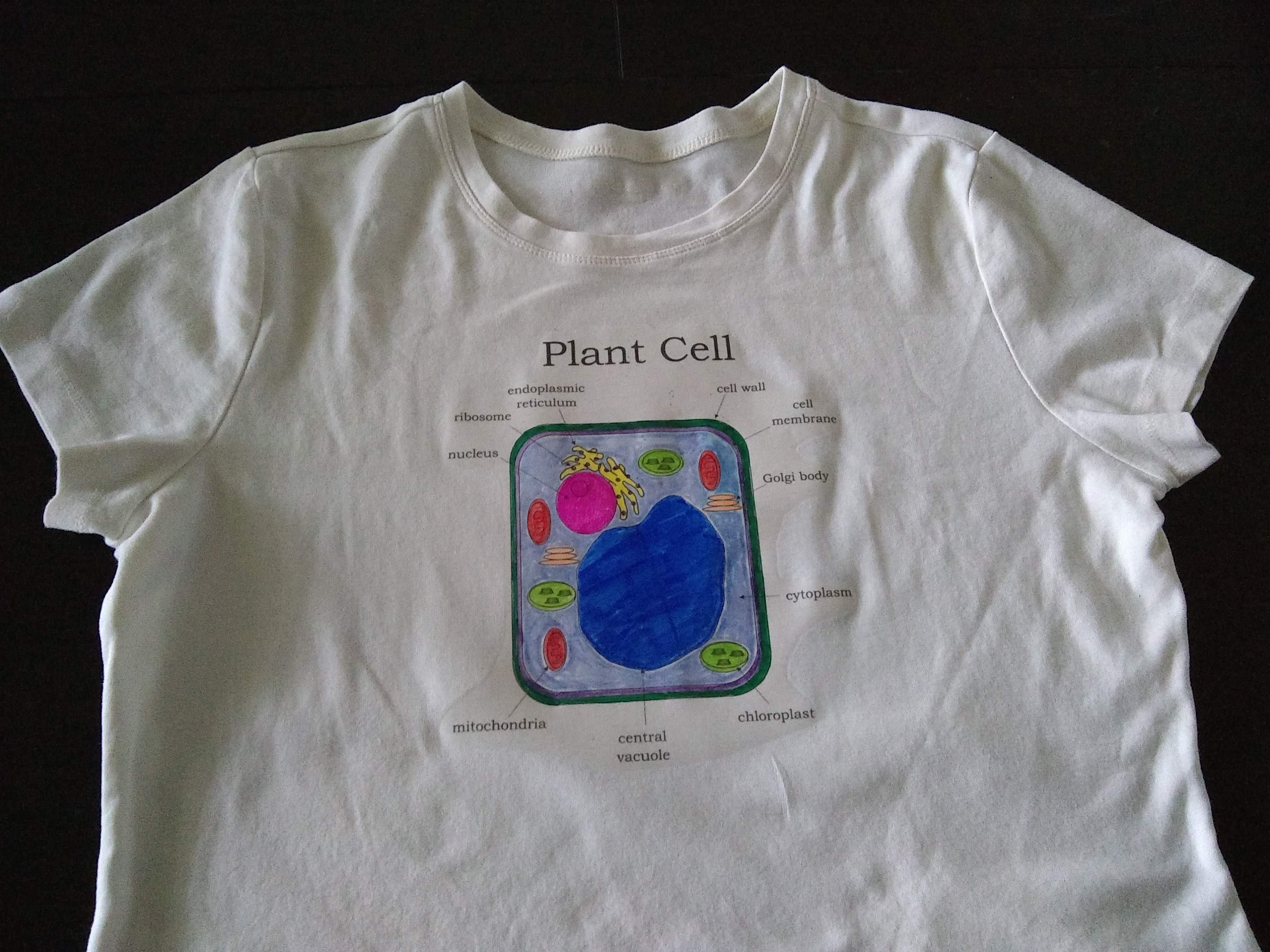
For the visual plant cell organelles activity, I use a plant cell iron-on, similar to the animal cell one:
For the organelle function recall, I have a matching game and a trivia game:
Animal vs. Plant Cells Trivia Game and Graphic Organizers
A cell model project can be used in addition to or instead of these. Making an edible model out of cake or gelatin with candies for organelles is a popular choice with students. I do require that they include all the organelles on the list, make a drawing and key for their model, and be able to describe what each organelle does for the cell. I found an example here on Instructables.com
Learning about cells should be fun! Including games and candy is an engaging way to keep the student’s attention and help them learn effectively.


 North Star Homeschool Resources